
FREE WORKSHOP FOR SOCIAL RESEARCHERS
Transform your transcripts with 5 simple tweaks to how you record qualitative research
Move through coding and analysis faster with simple, free, or low-cost tweaks to your qualitative data collection set-up guided by research-specialist transcription experts
JOIN THE (RESCHEDULED) LIVE ONLINE WORKSHOP
Tuesday 3 February at 7pm GMT
Optimise your research recordings to get
your transcripts done right, the first time around,
with our FREE 50-minute live interactive workshop.
Who is this workshop for?
You're tired of rubbish transcripts, vexed with dodgy verbatim audio capture, and perturbed by poor participant identification.
You've spent ages carefully planning your data collection, recruiting participants, and scheduling interviews and focus groups, coordinating workshops, and laying the groundwork for autonomous participant diaries.
You know audio capture of your qualitative data won't be enough to get from data collection to publication--you'll need to transform it from audio to text to enable analysis, coding, and perhaps even archiving, and you'll need some kind of transcription support to do that.
You need quick, impactful fixes that you can implement straight away, because you really don't have time to spend correcting bad transcripts instead of progressing your research project.
Bring examples, queries, and concerns from your own research projects and transcription experiences for us to explore how simple, low-cost and often free tweaks can elevate the quality of your transcripts, accelerating your journey from data collection to coding, analysis, and publication.
What You'll Learn
In this 50-minute workshop (including Q&A), you'll gain:
Five simple, free or low-cost tweaks you can implement today to get better transcripts, starting now.
Concrete insights and expertise from professional research-specialist transcribers with decades' of combined experience creating fantastic transcripts for some of the world's most prestigious research institutions.
A personalised action plan of how these tips and tricks can be operationalised within your current research project.
Join us on 3rd February 2026 to discover how small, practical changes can transform your research transcripts from 'meh' to 'marvellous!'
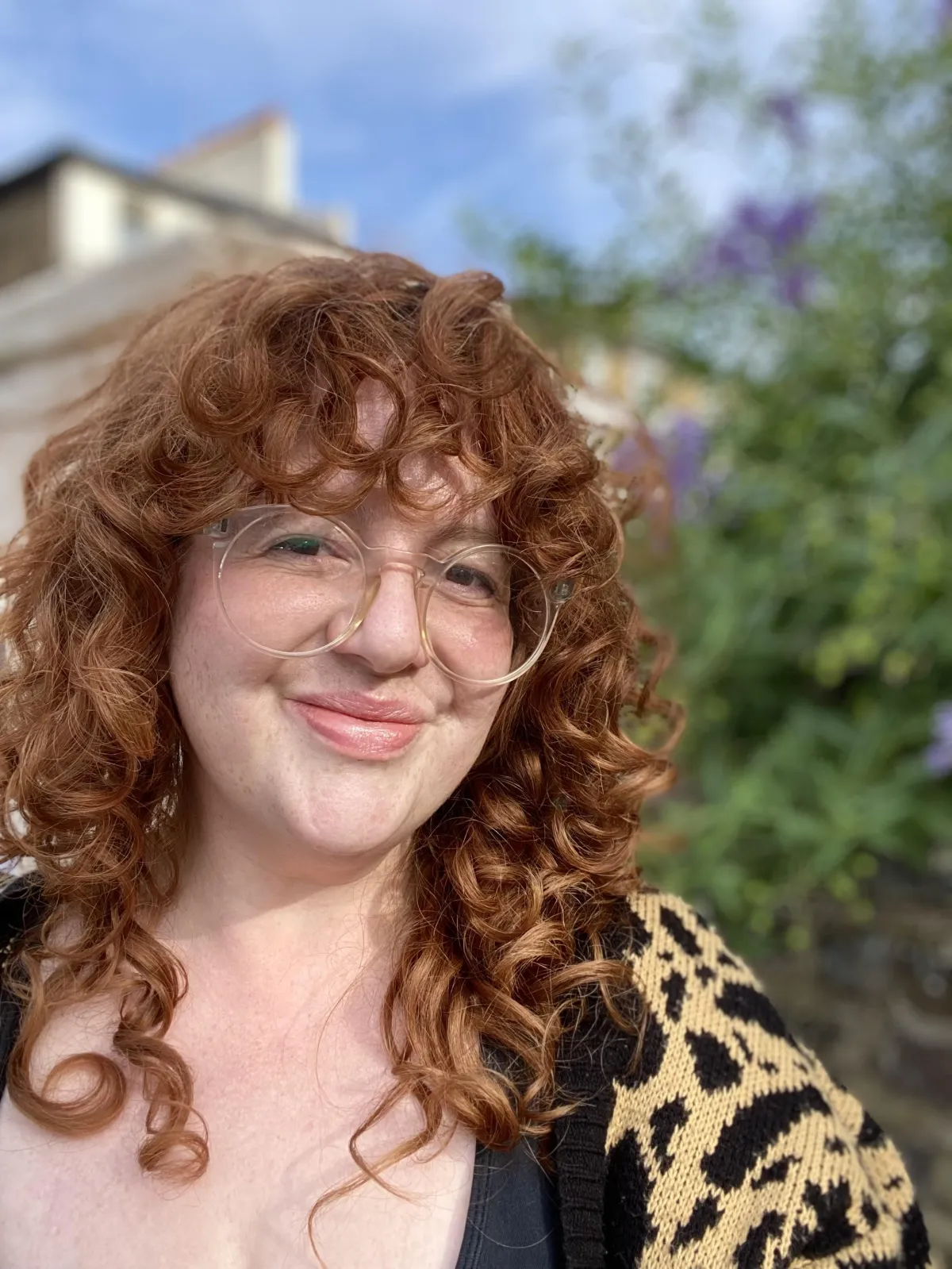
Your Host
Dr Zara Bain, Founder of Academic Audio Transcription Ltd and Accessibility Specialist
Zara Bain is an expert in social justice and social entrepreneur helping researchers, educators, and online businesses make knowledge--and knowledge-creation--more accessible.
As a disabled, chronically ill and neurodivergent researcher, Zara founded research-specialist transcription and closed-captioning social enterprise, Academic Audio Transcription, in 2017, after realising that if she wanted flexible, fairly-paid remote work accessible from bed or while housebound during medical leave from her doctoral studies, she'd need to build it herself.
Zara has a PhD in the philosophy of social justice from the University of Bristol, with particular emphasis on social epistemology, epistemic oppression, injustice and ignorance. Her work has been published in numerous prestigious international volumes, including the Routledge International Handbook of Ignorance Studies, as well as featured in The Guardian, The Times Higher Educational Supplement and The Philosopher 1923. She is also co-author of the world's first truly intersectional general introduction to philosophy, Philosophy: A Crash Course.
She lives in West London with her partner and two little boys, and in her spare time can be found walking in the woods, experimenting with new recipes, or volunteering at her local city farm.
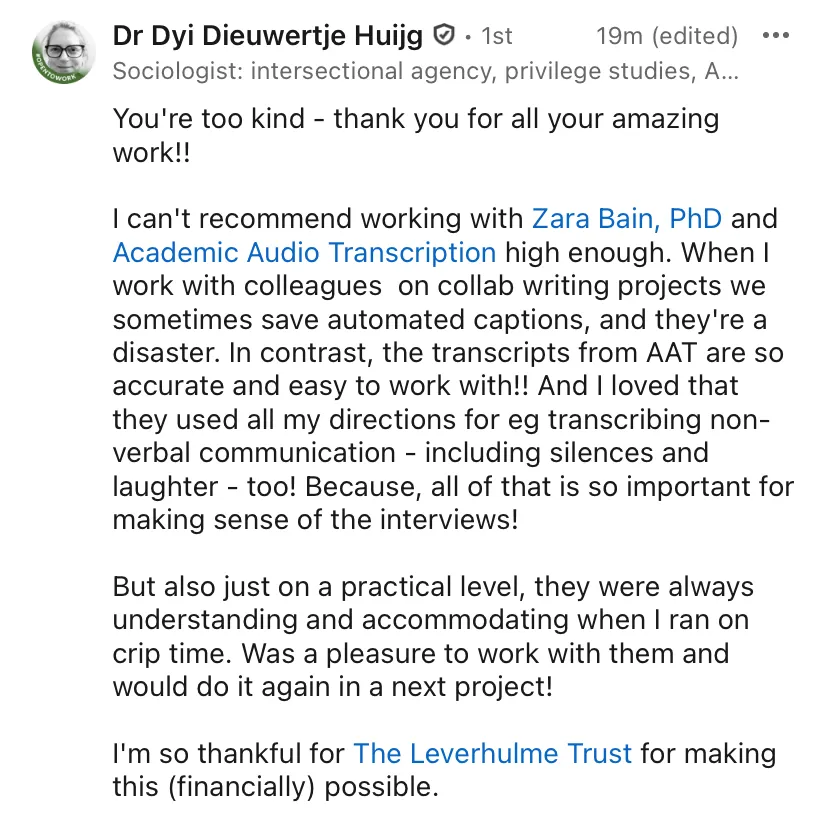
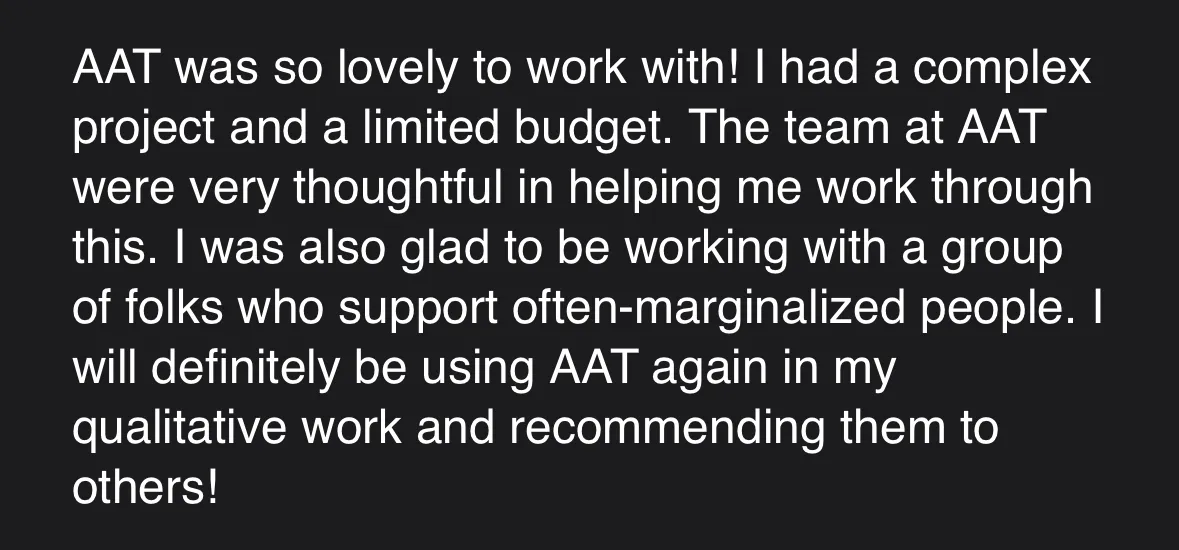
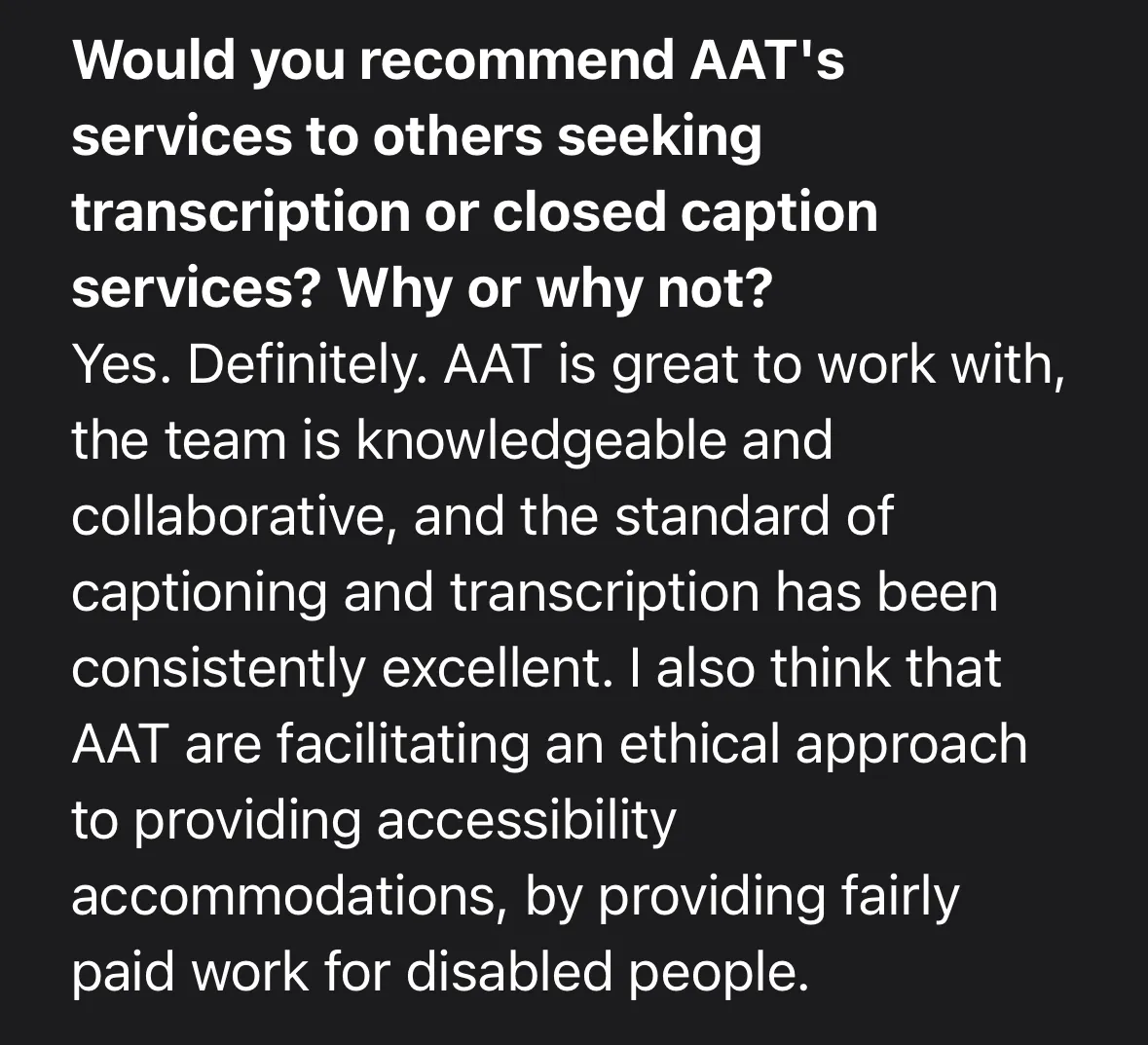
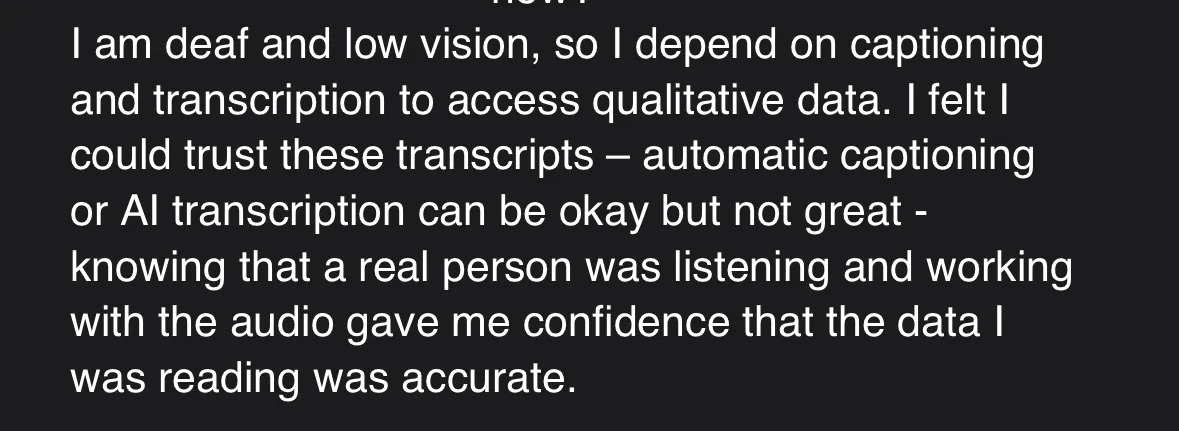
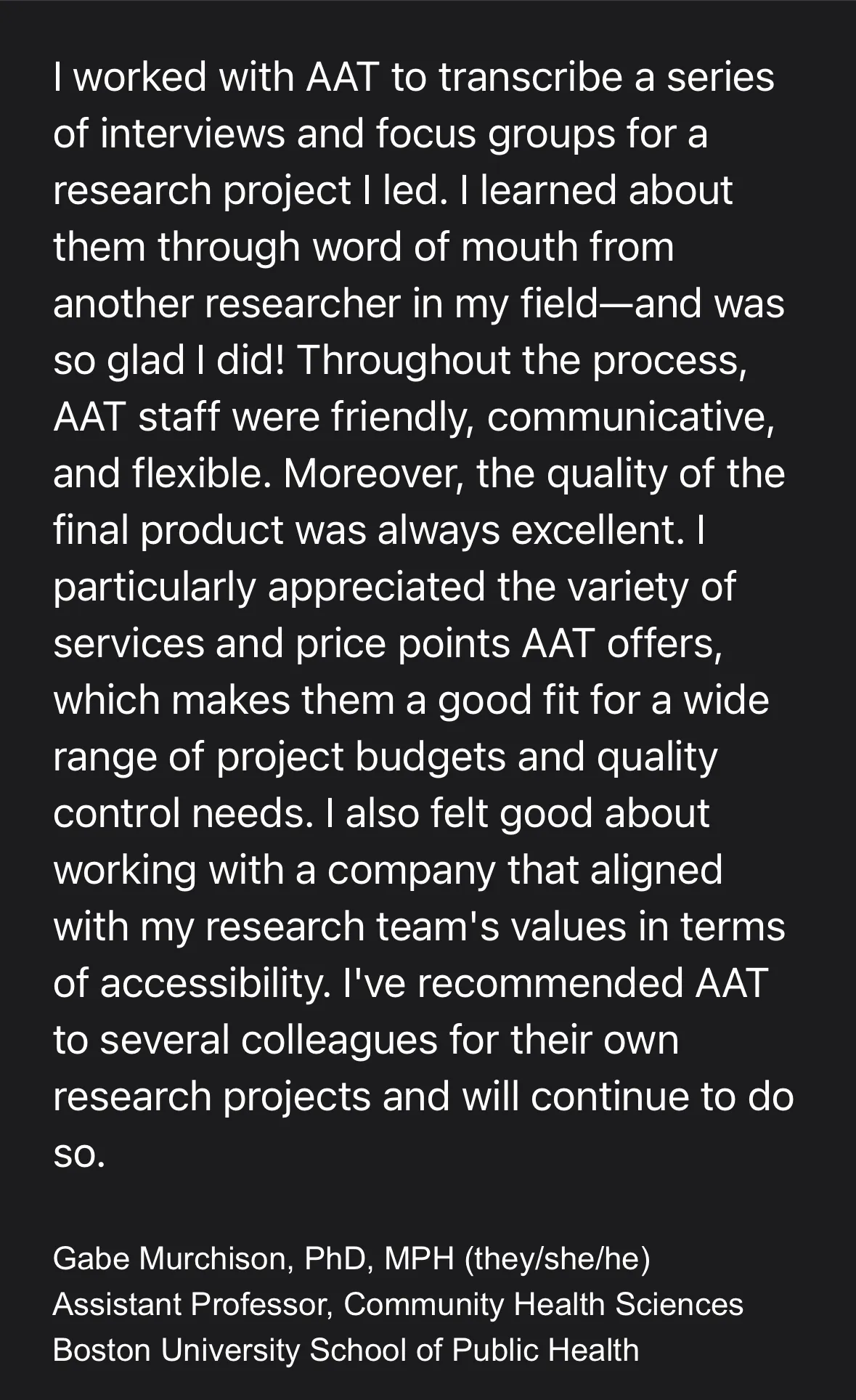
What People are Saying...
Save your seat today and get
ready to to be amazed how your transcripts level up
© Copyright. All Rights Reserved.


