
FREE ONLINE WEBINAR FOR SOCIAL RESEARCHERS
Qualitative Research in 2026: New Challenges and Opportunities
Join special guest speaker, Dr Karen Lumsden, expert trainer founder of Qualitative Training, to explore the current landscape of qualitative research and the challenges and opportunities every researcher should know.
JOIN THE LIVE WEBINAR
Thursday 1 October @ 1pm GMT+1
FREE ONLINE WEBINAR FOR SOCIAL RESEARCHERS
Qualitative Research in 2026:
New Challenges and Opportunities
Join special guest speaker, Dr Karen Lumsden, expert trainer founder of Qualitative Training, to explore the current landscape of qualitative research and the challenges and opportunities every researcher should know.
JOIN THE LIVE WEBINAR
Thursday 1 October 2026 @ 1pm GMT+1
Want an expert overview of recent trends, developments and shifts in qualitative research, what new challenges these create for researchers, and what novel opportunities they might present too?
What You'll Learn
In this 90-minute webinar plus Q&A, we'll cover:
What are the current challenges and opportunities that exist for qualitative research—and researchers—in 2026?
How has the recent arrival of AI technologies impacted expectations, practice, processes, and especially funding around qualitative research?
Is qualitative research changing in ways that reinforce or reject its distinctive focus on valuing what humans think, say, and do, within empirical data collection and analysis?
How can we respond to the shifting landscape of qualitative research and continue to champion qualitative research and support new researchers on their journey?
BROUGHT TO YOU BY


How you'll benefit
After our webinar and Q&A you'll:
Gain a better understanding of the cutting edge state of play for qualitative research in 2026, as well as the distinctive challenges and opportunities that exist for qualitative researchers.
Be confidently equipped to consider the ethics of qualitative research and how AI threatens the value inherent in qualitative approaches, whether you're someone who wants to embrace AI-based tools, resist using them or who is indifferent.
Clarify how the specific realities of the current moment are impacting qualitative research training needs and gain insight into how to meet them.
Join Dr Karen Lumsden, expert coach, trainer, consultant and founder of Qualitative Training for a free online webinar on Thursday 1 October 2026 at 1pm GMT+1 to delve into what's changing about qualitative empirical methods, what's staying the same, and how researchers like you can make the most of it

Our guest expert speaker
Dr Karen Lumsden
Founder of Qualitative Training
Founder of the Women in Qual Network
Karen Lumsden, PhD, is a trainer, consultant, and ICF qualified professional coach and mentor. She is the founder of Qualitative Training and the Women in Qual Community. She is a social scientist, with the majority of her research and evaluation work over the years sitting in/across sociology, criminology, and public health.
She has over 25 years’ experience delivering qualitative training, coaching and mentoring to academics, PhD students, social researchers and practitioners. Through her business, Qualitative Training, she regularly delivers the (first of its kind) 4-week Reflexive Thematic Analysis Bootcamp, and various popular virtual Masterclasses including, for example, on Trauma-Informed Qualitative Research, and Sensitive Qualitative Interviews.
She regularly delivers training for a range of clients including universities, the Social Research Association, the European Consortium for Political Research, government departments, NHS Trusts, charities, police constabularies, and social research organisations.
Karen has held a number of academic posts over the years, including Associate Professor in Criminology at the University of Leicester and the University of Nottingham, and Senior Lecturer in Sociology at the University of Aberdeen and Loughborough University. She officially left academia for the final time in early 2025.
Over the years, Karen has been involved in a number of funded research projects and evaluations in social sciences, policing and health. She has published extensively, including on qualitative research, reflexivity and autoethnography. She is co-editor of the award winning book - Crafting Autoethnography and Reflexivity in Criminological Research and the author of books including: Reflexivity: Theory, Method, Practice.
You can follow Karen on LinkedIn and subscribe to her newsletter here.

Your host
Dr Zara Bain
Founder of Academic Audio Transcription
Zara Bain is an expert in social justice and social entrepreneur helping researchers, educators, and online businesses make knowledge--and knowledge-creation--more accessible.
Zara has a PhD in social & political philosophy and social epistemology from the University of Bristol.
As a disabled, chronically ill and neurodivergent researcher, Zara founded research-specialist transcription and closed-captioning social enterprise, Academic Audio Transcription, in 2017, after realising that if she wanted flexible, fairly-paid remote work accessible from bed or while housebound during medical leave from her doctoral studies, she'd need to build it herself.
She lives in West London with her partner and two little boys, and in her spare time can be found walking in the woods, experimenting with new recipes, or volunteering at her local city farm.
Will this event be recorded?
What accessibility measures will be in place?
The event will take place over Zoom and the main seminar itself will be recorded, although we will turn the recording off for the Q&A.
All of our events include automated live captions as standard, although we recognise that these are an imperfect solution.
There will not be Sign Language Interpreting available at this event due to budgetary constraints, but we aim to include BSL interpreting at future events as soon as possible.
The replay will be emailed to everyone who signs up to the event, with Zoom-native automated closed-captions, within 24 hours of the event. We will also endeavour to share a PDF copy of any slides, including image descriptions/alt text.
Around 7-10 days after the event, we'll update the replay with high-quality, accessibility-first closed captions alongside a publication-ready transcript of the event (both supplied by Academic Audio Transcription).
If you have any questions about additional accessibility measures, please email us at [email protected].
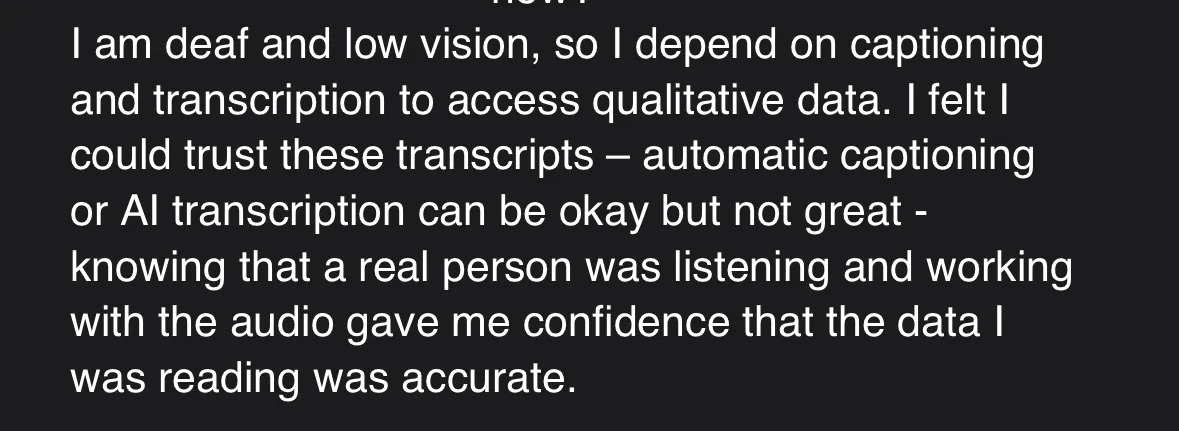
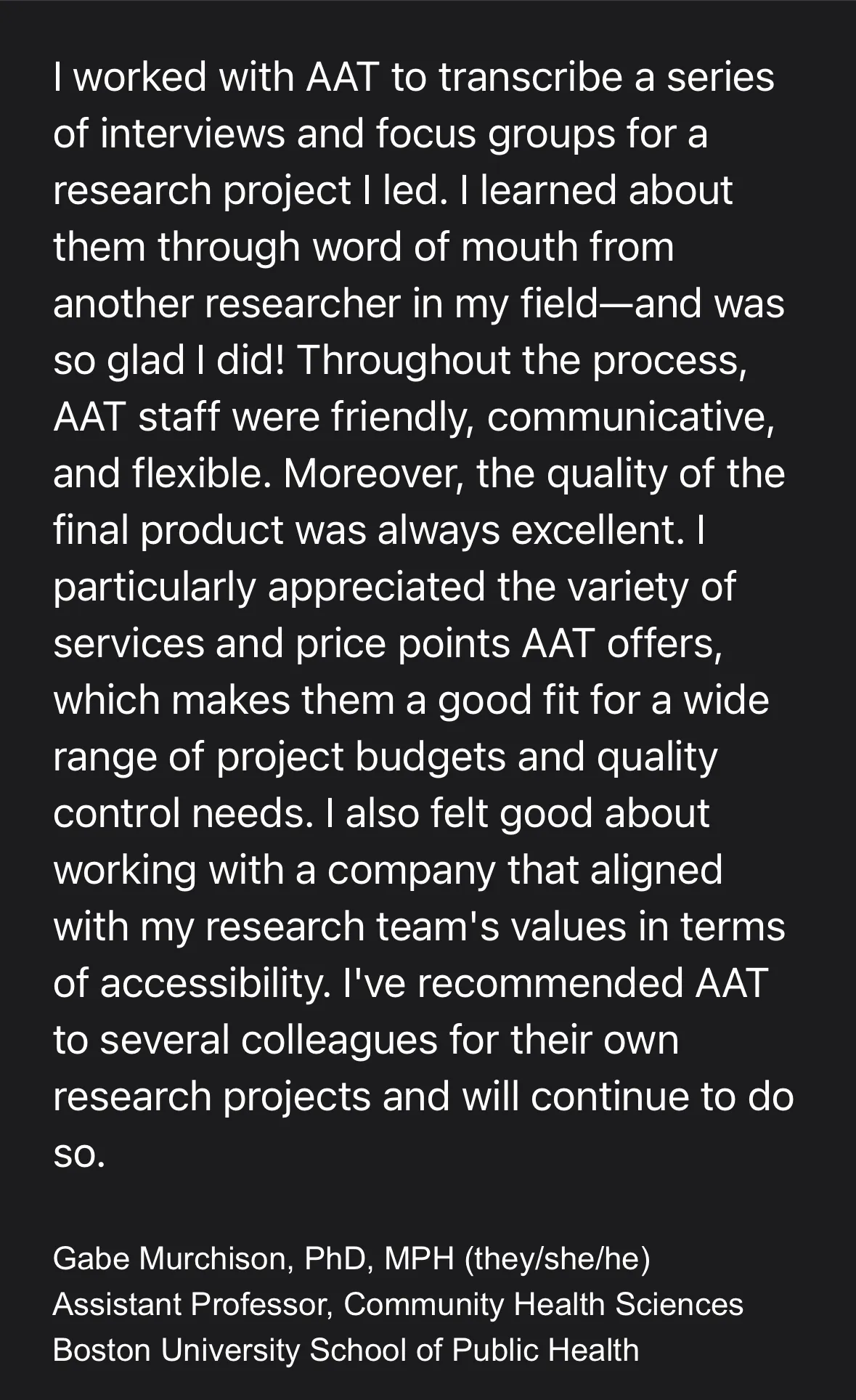
Nice words about your host,
Academic Audio Transcription
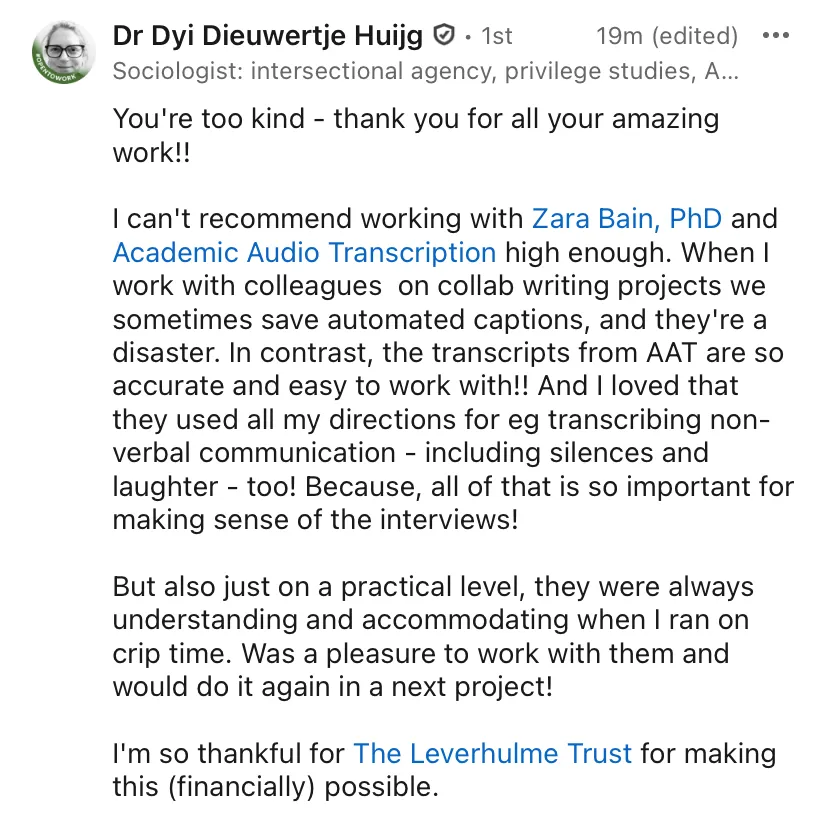
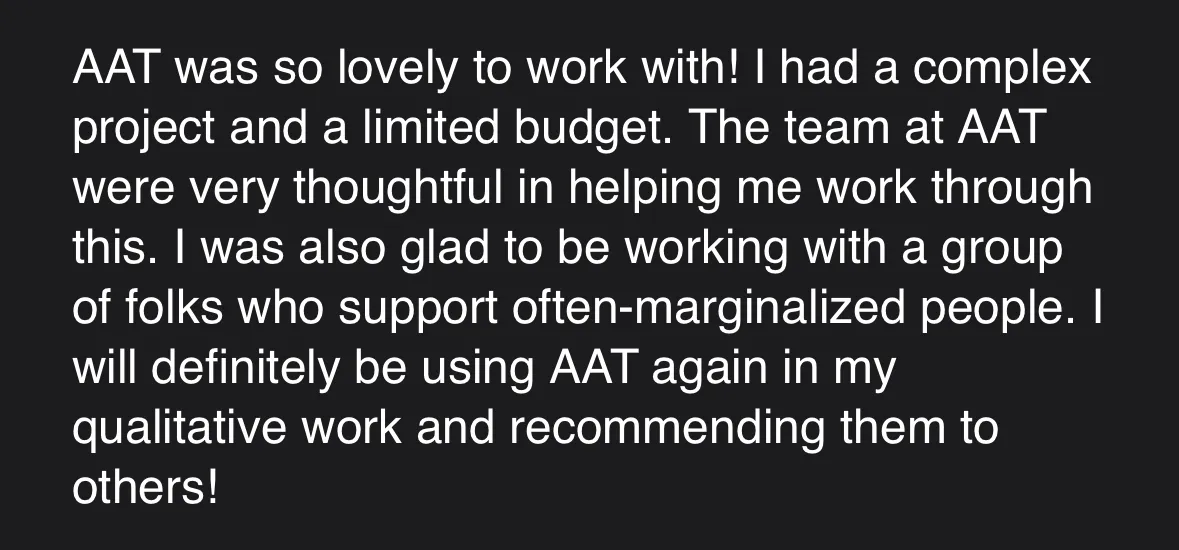
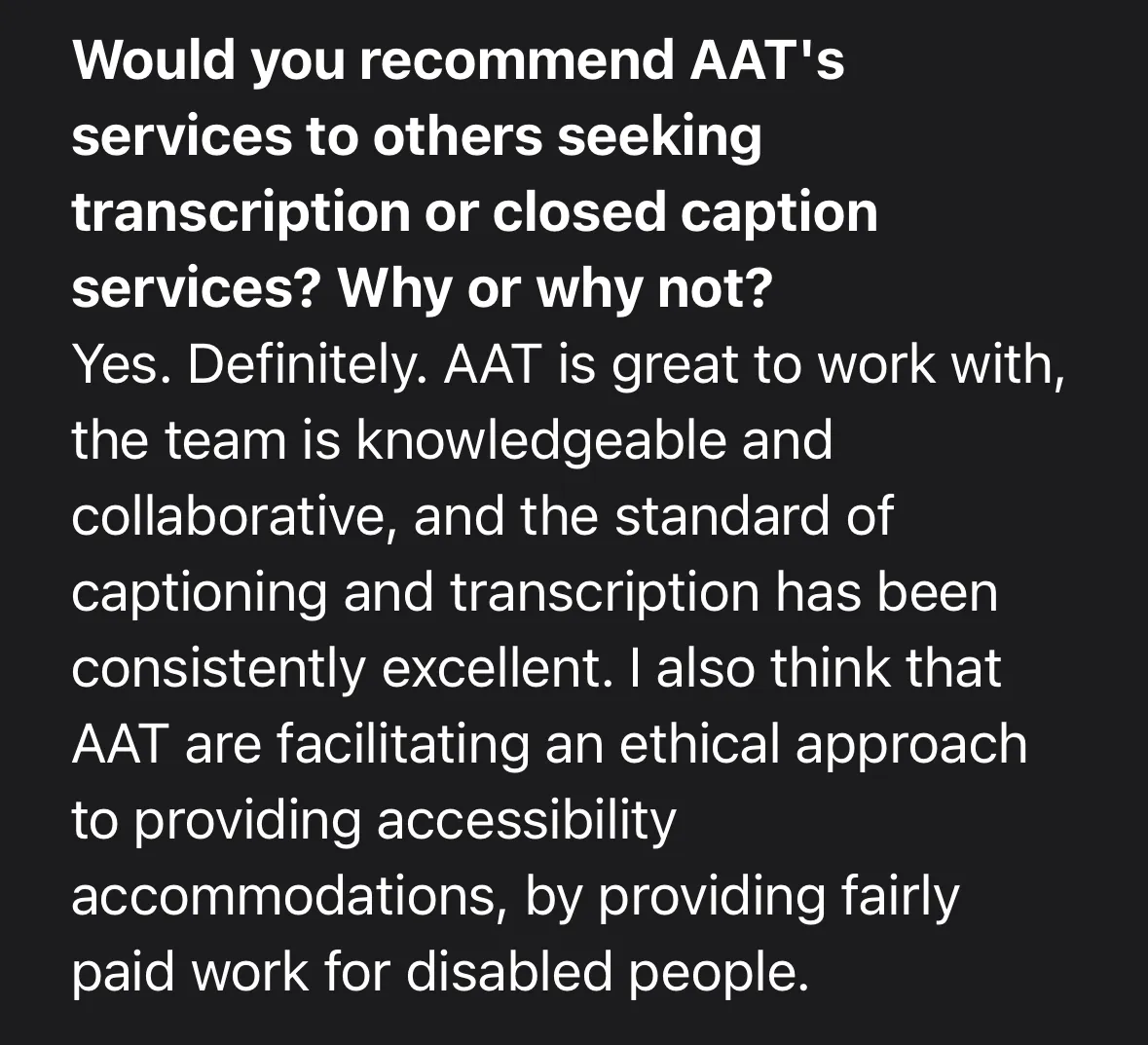
Save your seat today to get expert insight into the changing face of qualitative research and what challenges and opportunities it presents you, as a researcher, in 2026 and beyond
© Copyright. All Rights Reserved.

