FREE MONTHLY ONLINE WORKSHOPS
Epistemic Injustice, Oppression and Ignorance for Social Researchers
Join us for an informal exploration of these conceptual frameworks, get research recommendations on relevant resources and literature, and connect with like-minded researchers.
WHEN ARE THE NEXT WORKSHOPS?
Thursday 8 October at 1pm GMT+1
Tuesday 13 October at 7pm GMT+1
FREE BI-MONTHLY ONLINE WORKSHOPS
Epistemic Injustice, Oppression and Ignorance for Social Researchers
Join us for an informal exploration of these conceptual frameworks, get research recommendations on relevant resources and literature, and connect with like-minded researchers.
WHEN ARE THE NEXT WORKSHOPS?
Thursday 8 October at 1pm GMT+1
Tuesday 13 October at 7pm GMT+1
Are you a social researcher using epistemic injustice as a theoretical framework?
Ever wondered whether it's the best fit for your project, or whether alternative frameworks that prioritise systems-oriented analysis, historical phenomena like colonialism and imperialism, or epistemic alternatives to testimony or concepts, might offer more conceptual traction (as well as or instead of)?
What to expect from these workshops
In each 75-minute workshop, we'll:
Create a friendly, supportive space for social researchers like yourself to introduce your project and how you envisage epistemic injustice working as a conceptual framework within your research design.
Explore what's most appealing and important to you in terms of tracking ways that agents can be harmed epistemically in virtue of being members of marginalised or minoritised communities.
Dive deeper into how various contemporary developments in the theory and scholarship of epistemic injustice might support, enhance, or refine your project design and research planning.
Investigate how very similar but alternative theoretical frameworks, like epistemic oppression and epistemologies of ignorance, might offer novel fruitful resources to unlock new aspects of and approaches to your project.
Troubleshoot any questions, queries, concerns, or curiosities you might have about epistemic injustice, epistemic oppression or epistemologies of ignorance both as theories themselves and as resources for progressing your research.
Need some expert philosophical support navigating epistemic injustice and the landscape of connected concepts?
Join Dr Zara Bain for these free 75-minute online workshops where we'll explore your work and how the full range of connected concepts, like epistemic oppression and epistemologies of ignorance, can support your project.
Your host
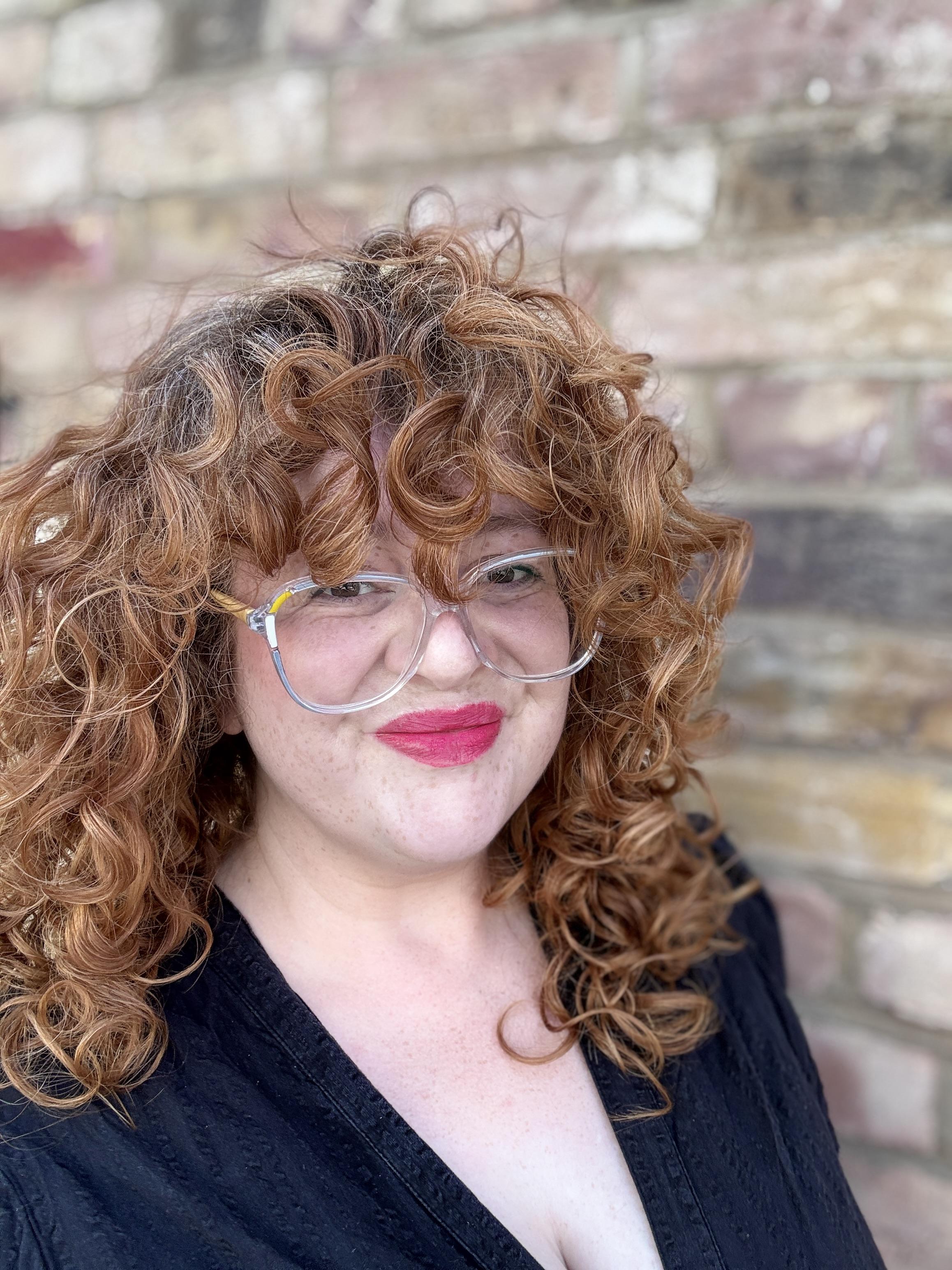
Dr Zara Bain
Founder of Academic Audio Transcription
Honorary Research Associate, Philosophy @ University of Bristol
Secrecy, Power & Ignorance Network (SPIN) Research Fellow
Zara Bain is an expert in social justice and social entrepreneur helping researchers, educators, and online businesses make knowledge--and knowledge-creation--more accessible.
Zara has a PhD in social & political philosophy and social epistemology from the University of Bristol, with particular emphasis on epistemologies of ignorance and epistemic oppression as features of socio-political systems like white supremacy and disability/ableism, as well as the work of late Jamaican-American political philosopher, Charles W. Mills (author of various books, most famously The Racial Contract).
Zara's work has been published in numerous prestigious international volumes, including the Routledge International Handbook of Ignorance Studies, as well as featured in The Guardian, The Times Higher Educational Supplement and The Philosopher 1923. She is also co-author of the world's first truly intersectional general introduction to philosophy, Philosophy: A Crash Course.
As a disabled, chronically ill and neurodivergent researcher, Zara founded research-specialist transcription and closed-captioning social enterprise, Academic Audio Transcription, in 2017, after realising that if she wanted flexible, fairly-paid remote work accessible from bed or while housebound during medical leave from her doctoral studies, she'd need to build it herself.
She lives in West London with her partner and two little boys, and in her spare time can be found walking in the woods, experimenting with new recipes, or volunteering at her local city farm.
Will this event be recorded?
What accessibility measures will be in place?
The event will take place over Zoom.
Since the focus is on researcher networking and community building in breakout rooms, we will not be recording these sessions.
All of our events include automated live captions as standard, although we recognise that these are an imperfect solution.
There will not be Sign Language Interpreting available at this event due to budgetary constraints, but we aim to include BSL interpreting at future events as soon as possible.
Because the focus is on researcher networking and we repeat sessions twice monthly, no recording will be made of the session nor circulated as a replay after the event. If you sign up but can't make it, it's absolutely fine, just come to the next session! Each session will be unique.
If you have any questions about additional accessibility measures, please email us at [email protected].
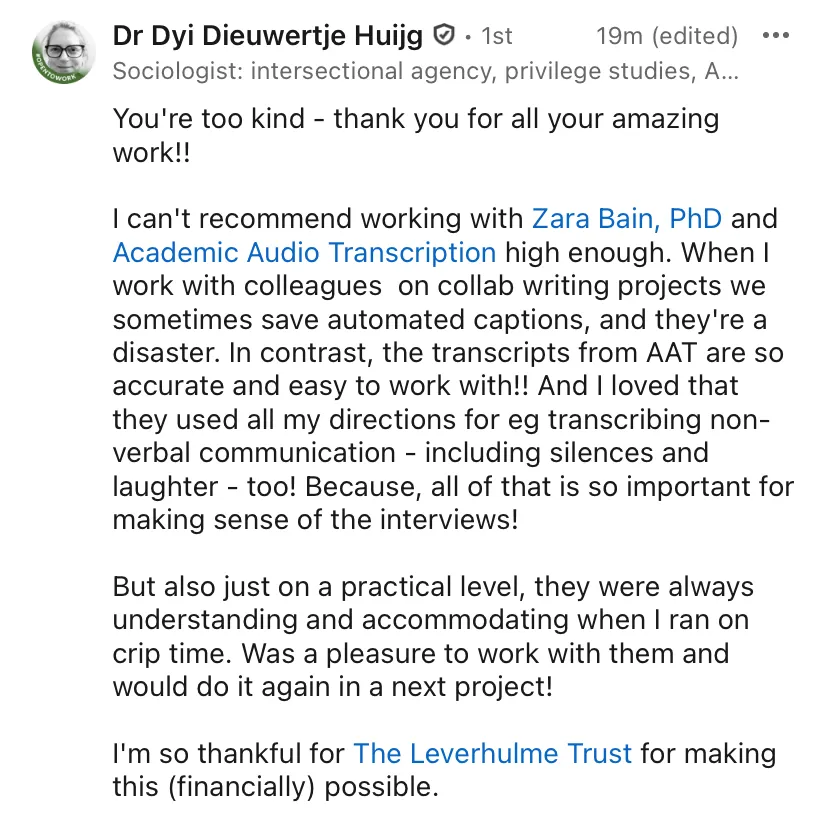
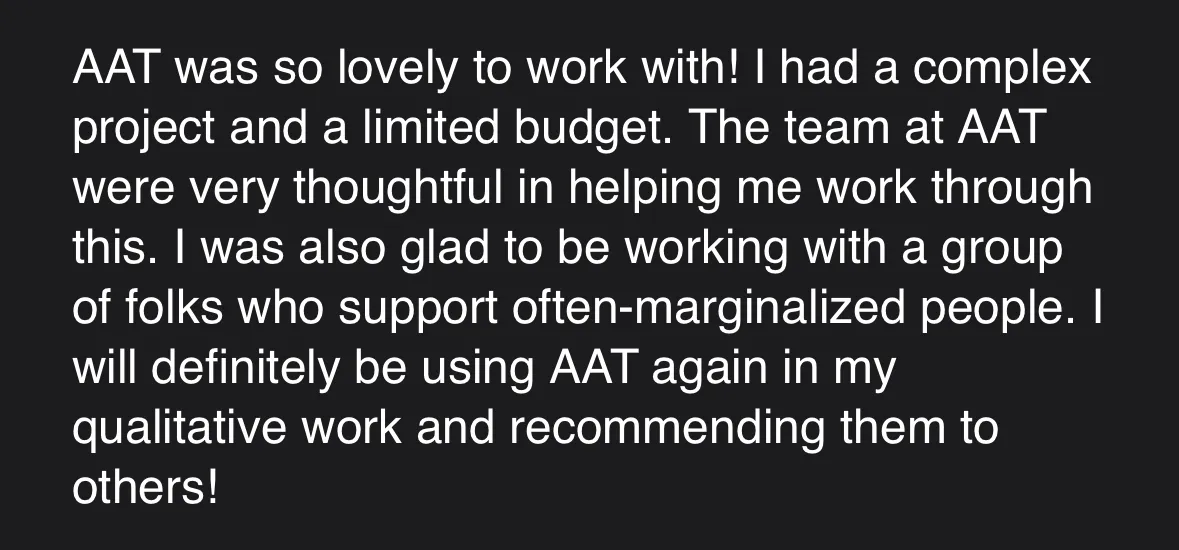
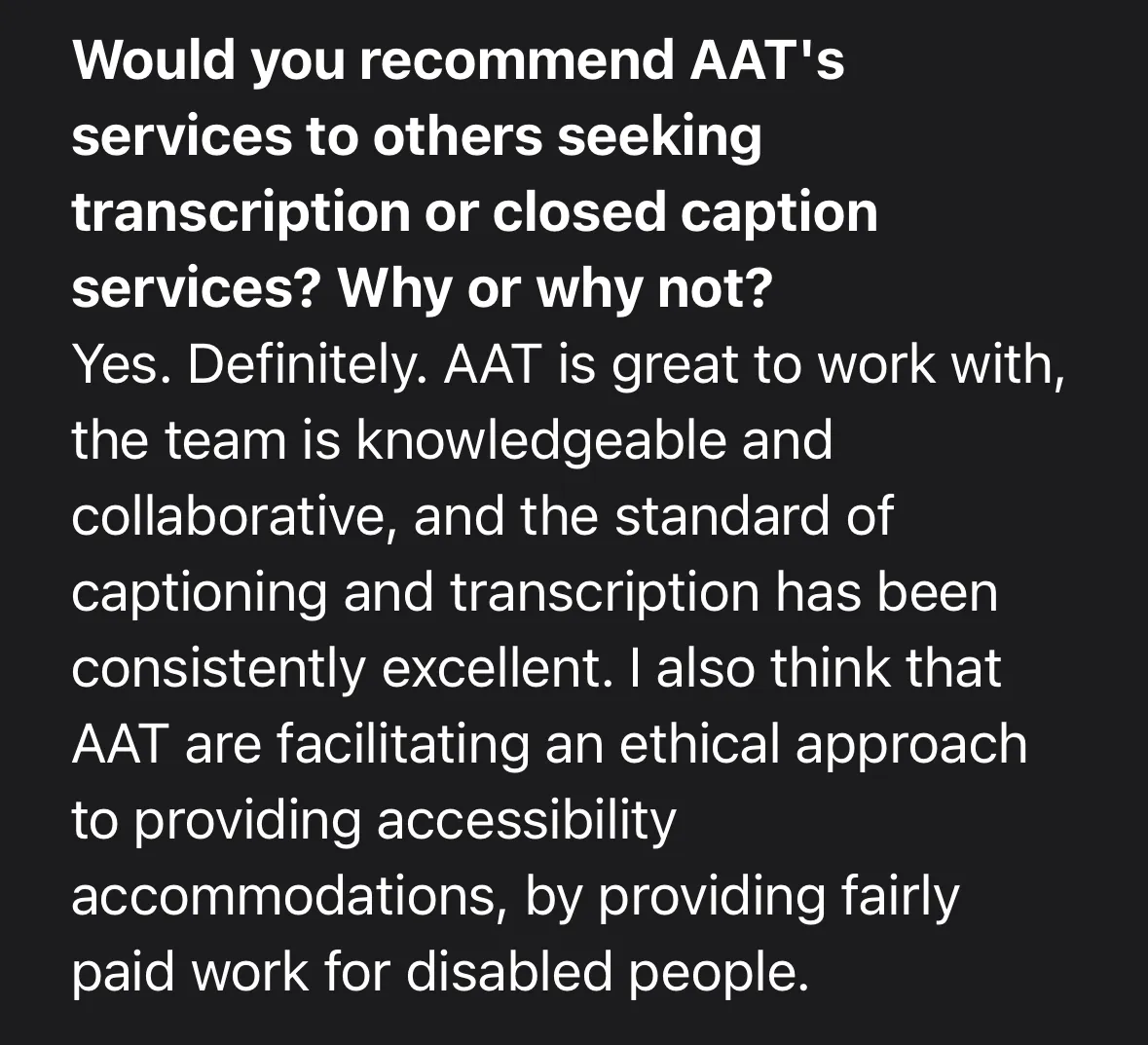
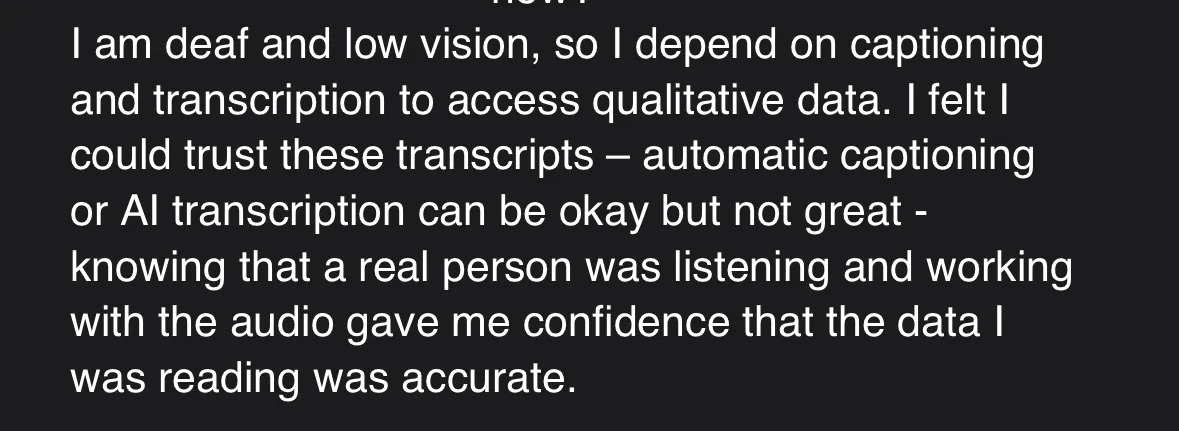
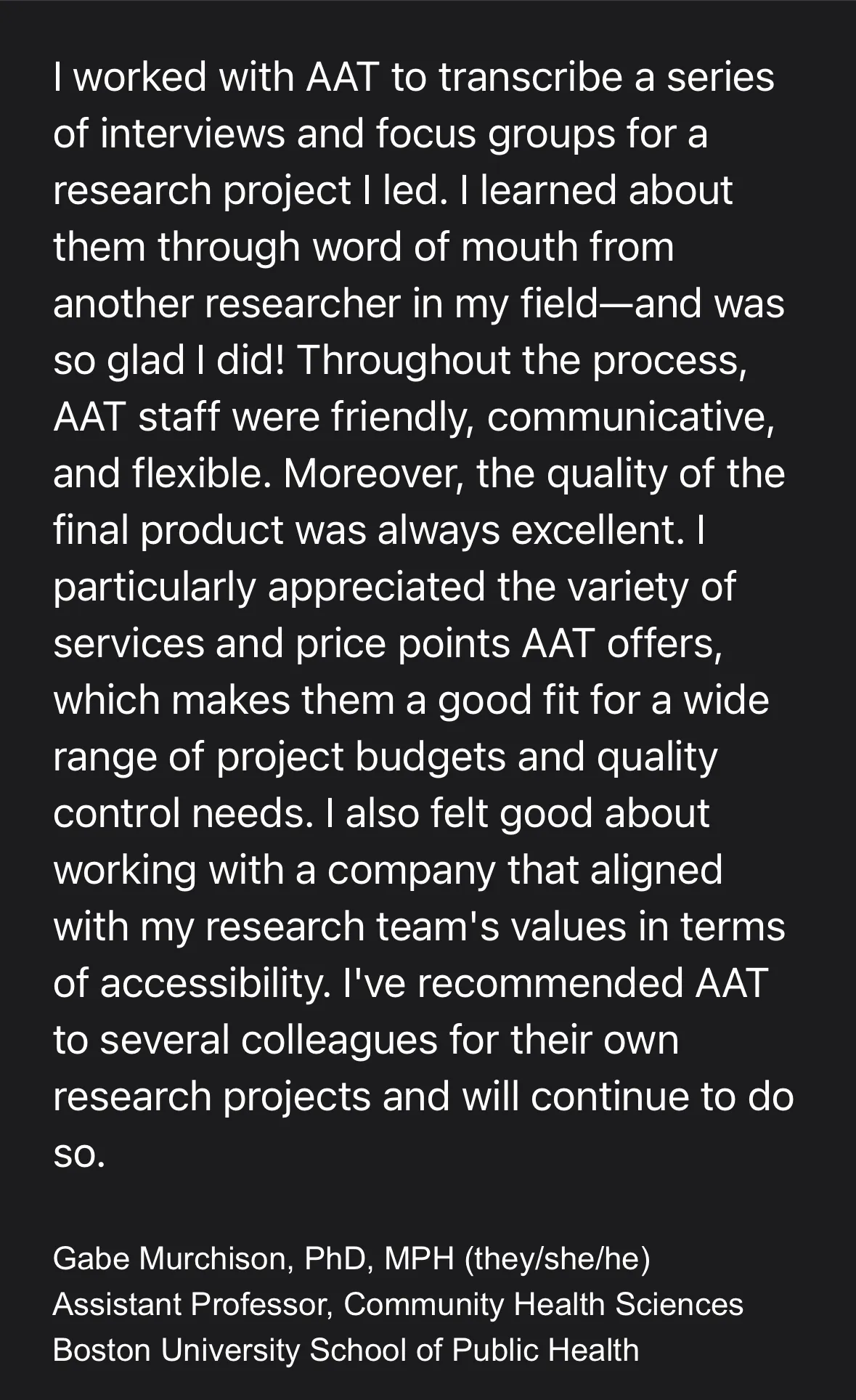
Nice words about your event sponsor
Academic Audio Transcription
Save your seat today to get expert support troubleshooting and refining your theoretical lens while connecting with like-minded researchers.
© Copyright. All Rights Reserved.

